
Central Asia · Country
UZBEKISTAN
built for scholars
Where Silk Road cities were built for scholars as much as merchants.
why uzbekistan
This was never simply a corridor for goods moving east and west.
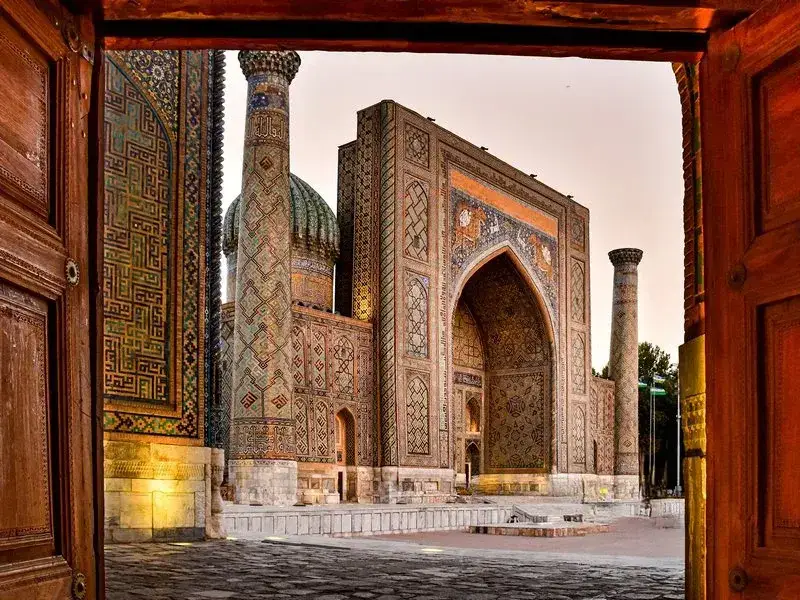
Samarkand’s Registan isn’t just beautiful: it’s three madrasas facing a public square, designed for teaching and scholarship. Bukhara has over 140 architectural monuments within walking distance, including madrasas, mosques, covered trading domes, and caravanserais. Khiva’s inner city is enclosed by brick walls, and families still live and work inside.
Al-Bukhari collected hadith here in the 9th century. Ulugh Beg built an observatory in Samarkand in the 1420s and catalogued 1,018 stars. Ibn Sina, known in the West as Avicenna, was born near Bukhara. Rulers here understood the value of knowledge and built cities accordingly.
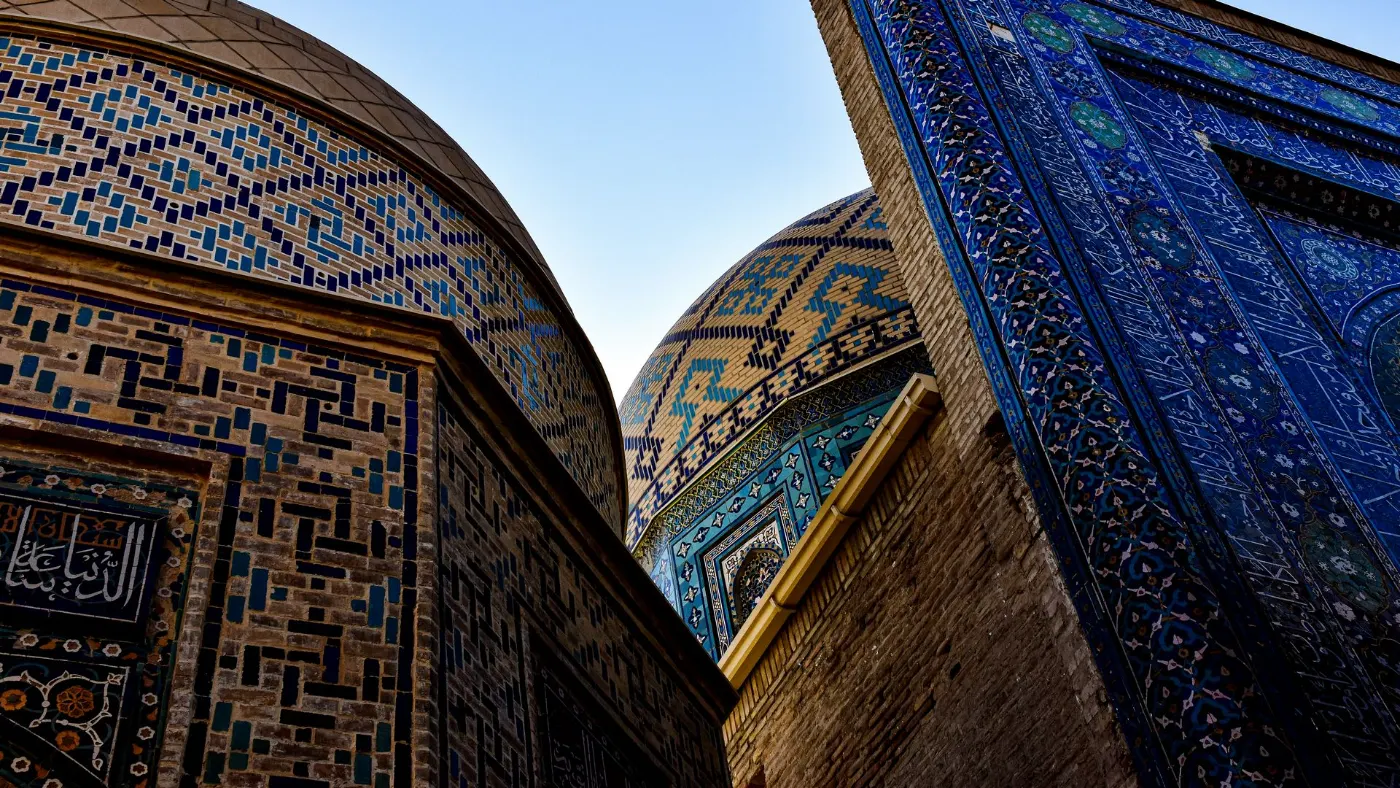
The blue tilework, the carved wooden ceilings, the courtyards designed for conversation and instruction: nothing else in Central Asia comes close.
at a glance
Uzbekistan at a Glance
01
Samarkand, Bukhara, and Khiva: the most intact Silk Road cities in Central Asia.
02
Architecture built to endure: madrasas, mosques, tilework, carved wood.
03
Applied arts still practiced: ceramics, textiles, metalwork, wood carving.
04
The Fergana Valley in the east; Karakalpakstan and the desert in the far west.
05
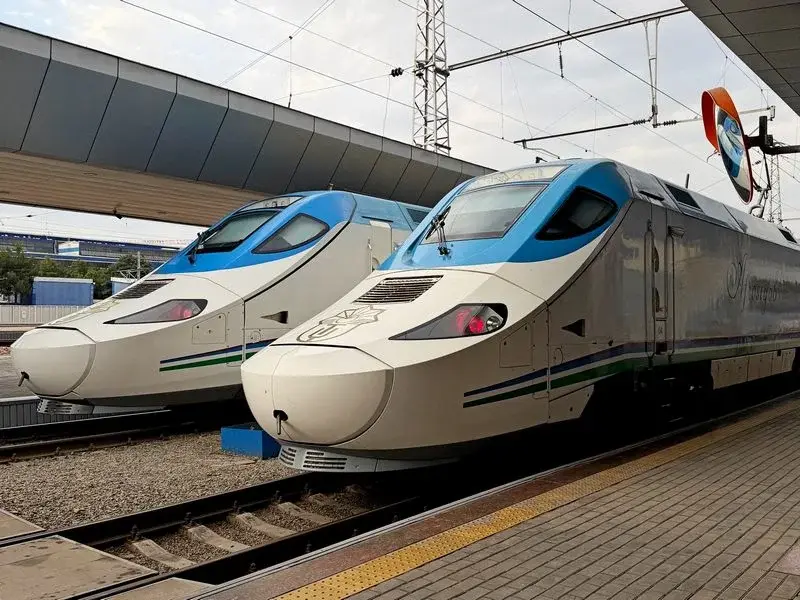
High-speed rail linking Tashkent to Samarkand in two hours, Bukhara in under four.
what uzbekistan requires
There is more here than can be absorbed in a single trip. Samarkand alone could fill several days. The challenge is choosing what to prioritize and giving each place enough time.
Rail handles the main corridor quickly. Roads reach the villages and craft centers beyond. Day trips from Samarkand, Bukhara, and Khiva connect travelers to rural areas where old techniques continue without much fanfare.
on the ground
How MIR Works in Uzbekistan
MIR has been here since the Soviet period, spending the last 40 years building operations when few foreign companies stayed through independence. Uzbekistan remains the center of our Central Asia work, supported by a long-standing representative office and a sister DMC on the ground.
We know how things function, where flexibility exists, and where it doesn’t.
what to expect
Samarkand
The Registan, Gur-e-Amir (Timur’s tomb), Shah-i-Zinda necropolis, Ulugh Beg’s observatory ruins.
Bukhara
The Ark fortress, trading domes, the Lyab-i Hauz plaza, Chor Minor. Walk the old city at dusk when the calls to prayer come from several directions at once.
Khiva
Compact, enclosed, walkable. The Kalta Minor minaret. The Juma Mosque with its 200 carved wooden columns. The Khan’s palace.
Beyond the Main Cities
Shakhrisabz, Timur’s birthplace south of Samarkand. Craft workshops in the Fergana Valley. Nukus, where the Savitsky Museum holds one of the world’s largest collections of Soviet-era avant-garde art, assembled quietly during the censorship years.
how programs work
Rail, road, craft, and the working bazaar.
01 — Where the Day Ends
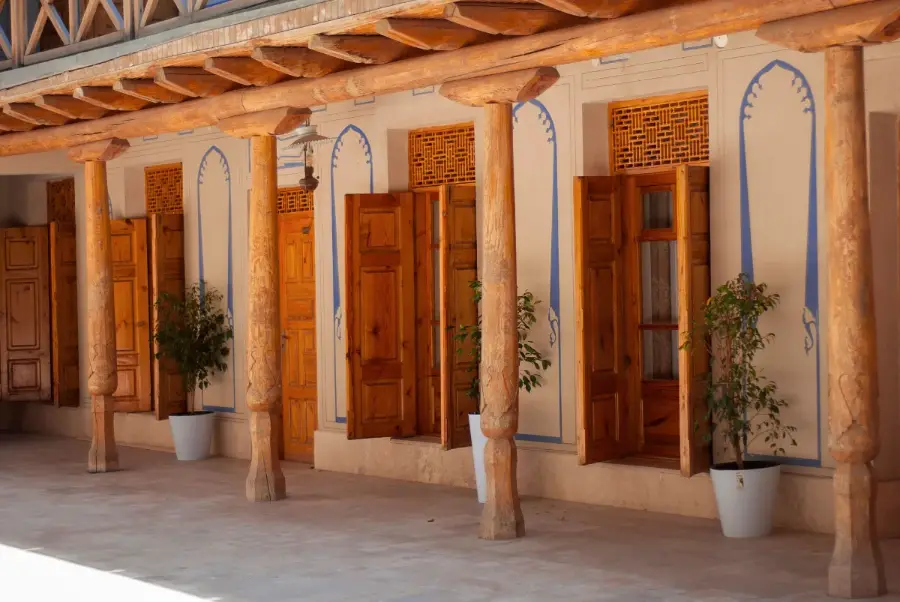
Tashkent has a range of international hotels. Samarkand, Bukhara, and Khiva also have good options, typically boutique-scale properties inside historic buildings where staying put for an evening is worth the time.
02 — Travel by Rail, Road, and Air
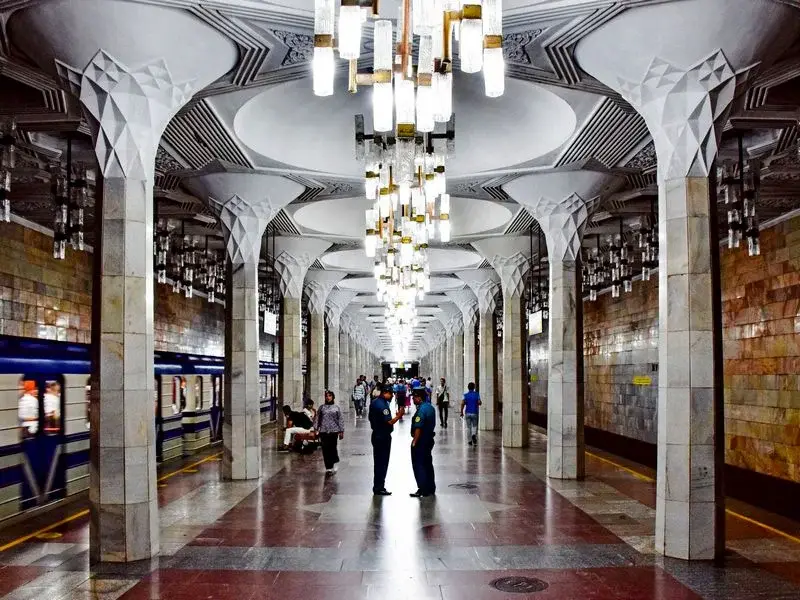
High-speed rail connects the main cities efficiently. Tashkent to Samarkand runs just over two hours; Tashkent to Bukhara in under four. More routes are in development.
Road travel and short flights fill in what rail doesn’t reach. Day trips by car get to villages and craft centers beyond the main cities, passing farmland, irrigation canals, and stretches of desert that put the historic cities in physical context.
03 — Art and Craft
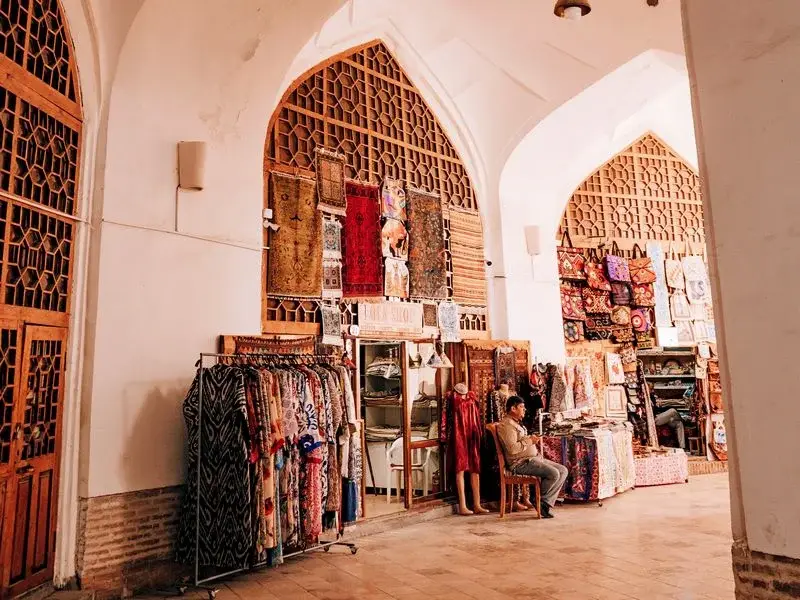
Tilework on mosque facades. Wood carving on doors and ceilings. Ceramics from Rishtan. Silk textiles from Margilan. Suzani embroidery. Craftspeople here learned from their parents, who learned from theirs.
04 — Bazaars and Food
Chorsu Bazaar in Tashkent and Siyob Bazaar in Samarkand are working markets, not set pieces.
Plov is the national dish and every region makes it differently. Bread is baked fresh daily and treated with respect: never placed on the ground, never thrown away. Samsa (baked meat pastries) come hot from street vendors. Tea is served in small ceramic bowls without handles.

Getting AroundRail handles the main corridor. Short flights and roads reach everything else. Most programs use all three.
when to consider uzbekistan
Where Central Asia first comes into focus.
For many travelers, Uzbekistan is where Central Asia first comes into focus. The history, the architecture, the craft traditions: it’s all here in concentration, and it tends to make travelers want to go further.
We build programs that go well beyond the standard circuit. In Uzbekistan, that might mean time with makers and scholars who don’t usually work with outside visitors, access to monuments and collections at hours when the crowds are gone, or an evening in a setting that makes the cities feel the way they must have centuries ago. These are the kinds of details that take time to arrange and are hard to find elsewhere.
And if you have clients dreaming of epic journeys like driving themselves along the Silk Road for weeks or months across multiple countries, needing vehicle documentation, border crossing support, advance fixers, guides, and logistics at every stage, we’ve done it and can make it work.
working on something?
If you’re developing a program here, we’re ready to talk.
More in Central Asia