
South Caucasus
AZERBAIJAN
land of fire
Fire, oil, and the Caspian built a country that connects Europe, Asia, and the Middle East.
why azerbaijan
Zoroastrians worshipped fire here long before Islam arrived.
Natural gas still burns at Yanar Dag, and the fire temple at Ateshgah drew pilgrims for centuries. Oil came next. Baku’s first boom started in the 1870s when barons built mansions and brought electricity to the city before most of London had it. Fortunes have risen and fallen with every oil crisis since.
Islam arrived through Persia, the Turkic language from the east, and Russian control in the 1800s. Today Azerbaijan is a secular country: women dress as they choose, alcohol is widely available, and faith is a private rather than a public matter.
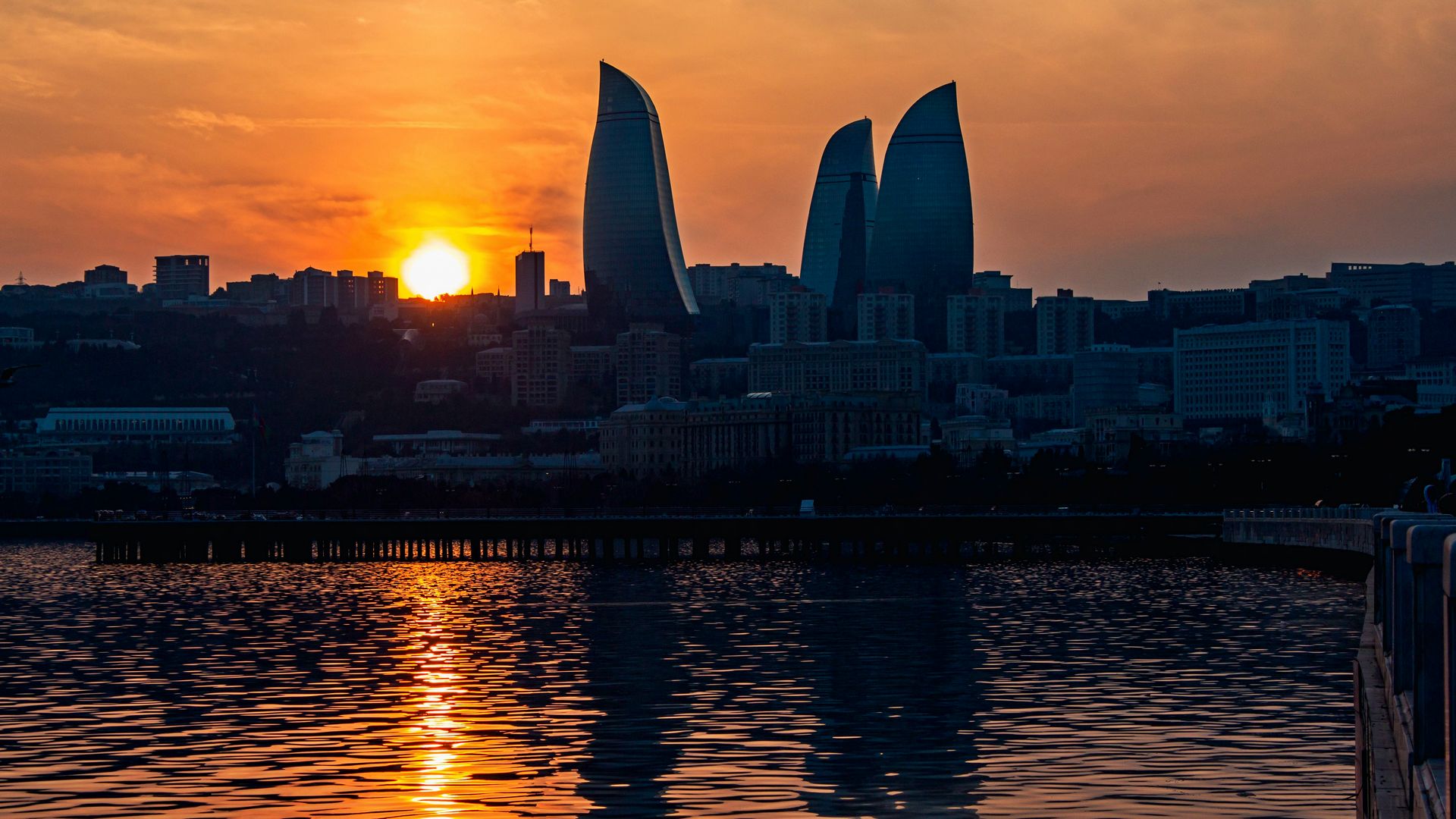
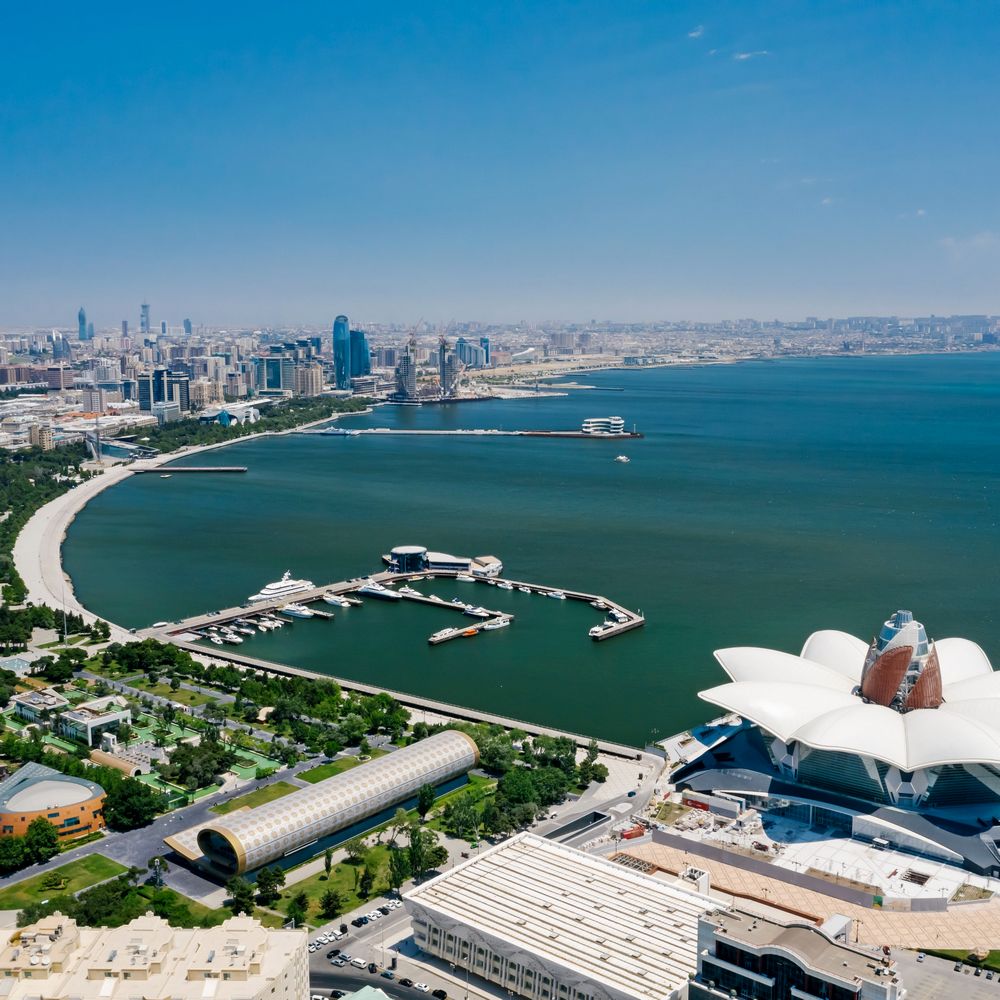
Baku hosts Formula 1, commissioned buildings from Zaha Hadid, and hosted Eurovision in 2012. It’s a city that clearly enjoys being watched.
at a glance
What sets Azerbaijan apart
01
The wealthiest country in the South Caucasus.
02
Baku blends medieval walls, 19th-century oil wealth, Soviet-era blocks, and contemporary architecture.
03
A carpet-making tradition that is centuries old, with one of the great carpet collections in the world.
04
Mountain villages where Jewish communities have lived for centuries, and where traditional ways of life continue.
05
Direct flights to Tbilisi, Tashkent, and Almaty.
what azerbaijan requires
Baku is the anchor. All international flights arrive there, and the city has the best hotels, restaurants, and infrastructure in the region.
Beyond Baku, Azerbaijan opens into mountains and villages. Sheki’s Khan’s Palace is decorated with stained-glass windows and frescoes. Lahij is a mountain village where coppersmiths have worked the same way for centuries. Guba has a still active Jewish community with roots going back generations. And Khinalug, one of the most remote villages in the Caucasus, sits at 2,350 meters and is home to a people who trace their ancestry back more than 5,000 years, with stone-and-dung houses, and a language spoken nowhere else on earth.
on the ground
How MIR Works in Azerbaijan
MIR has operated across the South Caucasus and Central Asia for four decades. Azerbaijan often serves as the starting point of a South Caucasus program, or a mid-point in a longer Silk Road journey continuing east. It pairs naturally with Georgia; most programs combine the two countries before continuing to Armenia.
what to expect
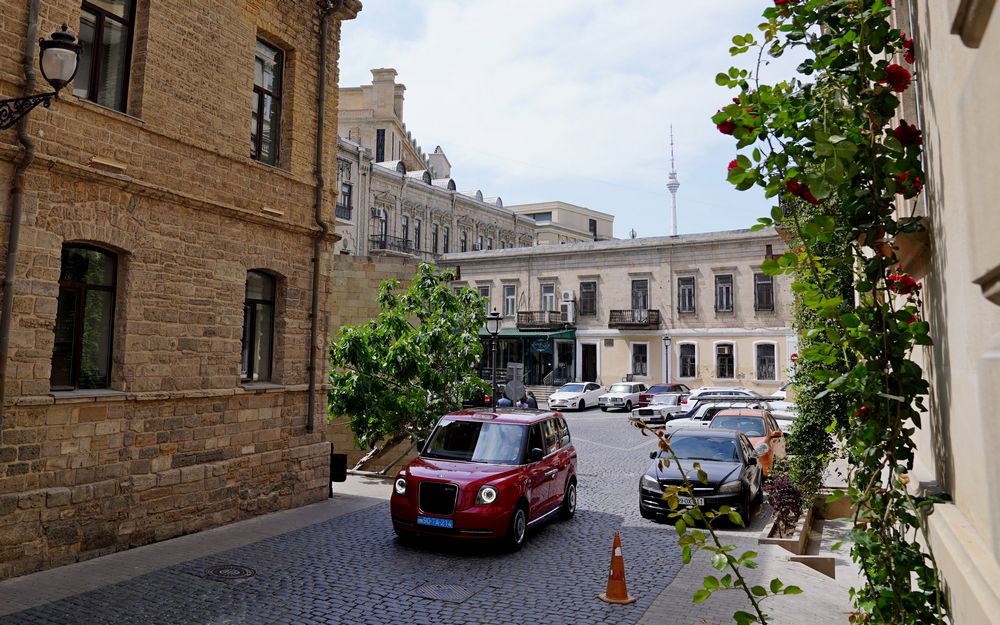
Baku’s Old City holds the Maiden Tower, the Shirvanshah Palace complex, medieval bathhouses, and caravanserais from the Silk Road era. Walk out through the walls into the 19th-century core, where oil money built European-style boulevards and limestone mansions.
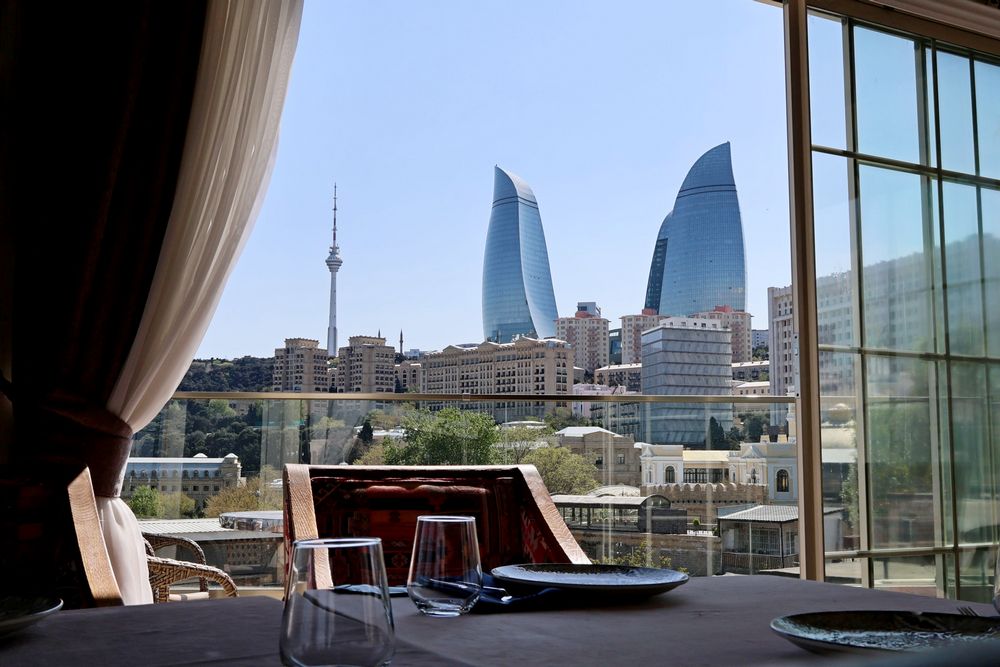
The Flame Towers dominate the skyline. The Heydar Aliyev Center (Hadid’s building) curves in ways that challenge structural logic. The National Carpet Museum holds one of the finest collections of Azerbaijani weaving in the world, and carpet-making is still practiced across the country.
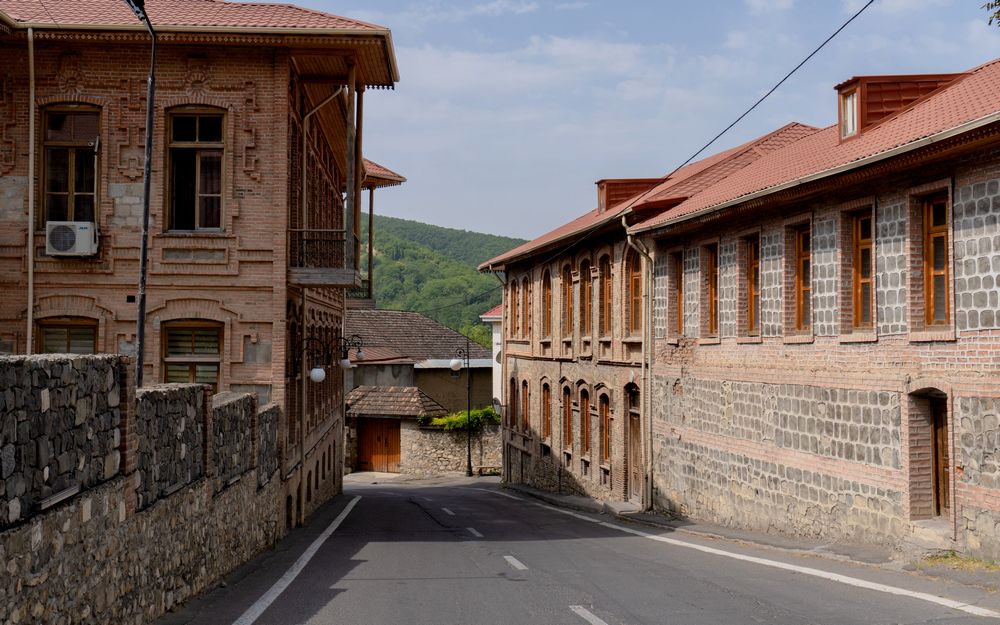
Outside Baku, Sheki, Lahij, Guba, and Khinalug are each worth the detour. None of them feel like the capital.
how programs work
Built around access, proportion, and time.
01 — Where the Day Ends
Baku has multiple five-star hotels and currently offers the strongest hotel market in the South Caucasus. Standards are high and the service is professional.
Outside the capital, hotels are smaller and guesthouses more common. In the mountain villages, the rooms are basic. Few guests seem to mind.
02 — Food and Wine
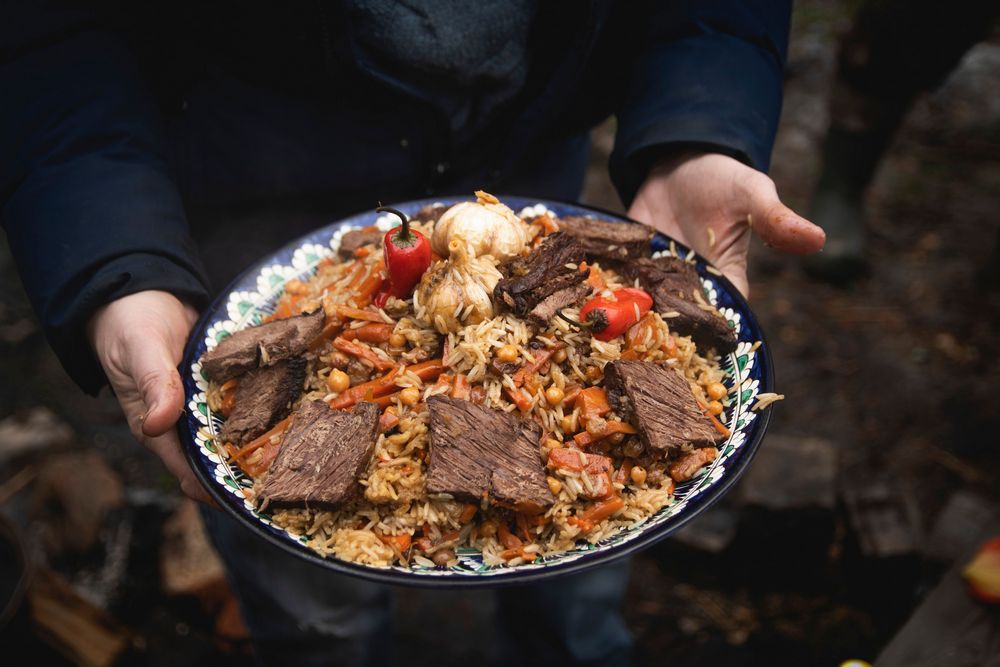
Azerbaijani cooking sits at the intersection of Turkic, Caucasian and wider regional traditions. Plov, kebabs, dolma, fresh herbs, pomegranates. Baku’s restaurants range from traditional to genuinely contemporary.
Wine production is growing, with local grape varieties and small producers worth seeking out. The Caspian Sea provides sturgeon, and caviar production has shifted toward sustainability after decades of near-collapse, which makes tasting it here feel like the right place to do it.
03 — Getting Around
Azerbaijan connects overland with Georgia. Most programs travel through Azerbaijan, Georgia, and on to Armenia in sequence. Baku also flies directly to Tbilisi, Tashkent, and Almaty, connecting the South Caucasus with Central Asia’s Stans.
when to consider azerbaijan
A city unlike any other in the region, and more beyond it.
Azerbaijan stands well on its own and makes even more sense as part of a three-country South Caucasus program. The Silk Road history, the carpet traditions, the mountain villages, and a city unlike any other in the region: there is more here than a short trip can cover.
We put together programs that go well beyond the standard itinerary. In Baku, that might mean private access to something rarely offered to outside visitors, or taking in the city’s extraordinary skyline from a vantage point most travelers never find. Out in the countryside, it could mean getting into landscapes that don’t appear in any guidebook, or sitting down to a meal that takes half a day to arrange and is worth every minute of it. These are the kinds of details that separate a good trip from one that people talk about for years.
We work across the spectrum. A recent traveler spent 98 days on horseback through Armenia, Georgia, and Azerbaijan. Another arrived by private jet, hit only the wow highlights, and was gone in under a week. Tell us what you need.
working on something?
If you’re developing a program here, we’re ready to talk.
More in the South Caucasus