The Silk Road was not a single road; it was a far-flung web of lonely camel tracks leading from the East to the West and back again. Mother of all road trips, the Silk Road became the conduit for spreading belief systems, new forms of architecture, agriculture, music and art to the world.
Along the Silk Road
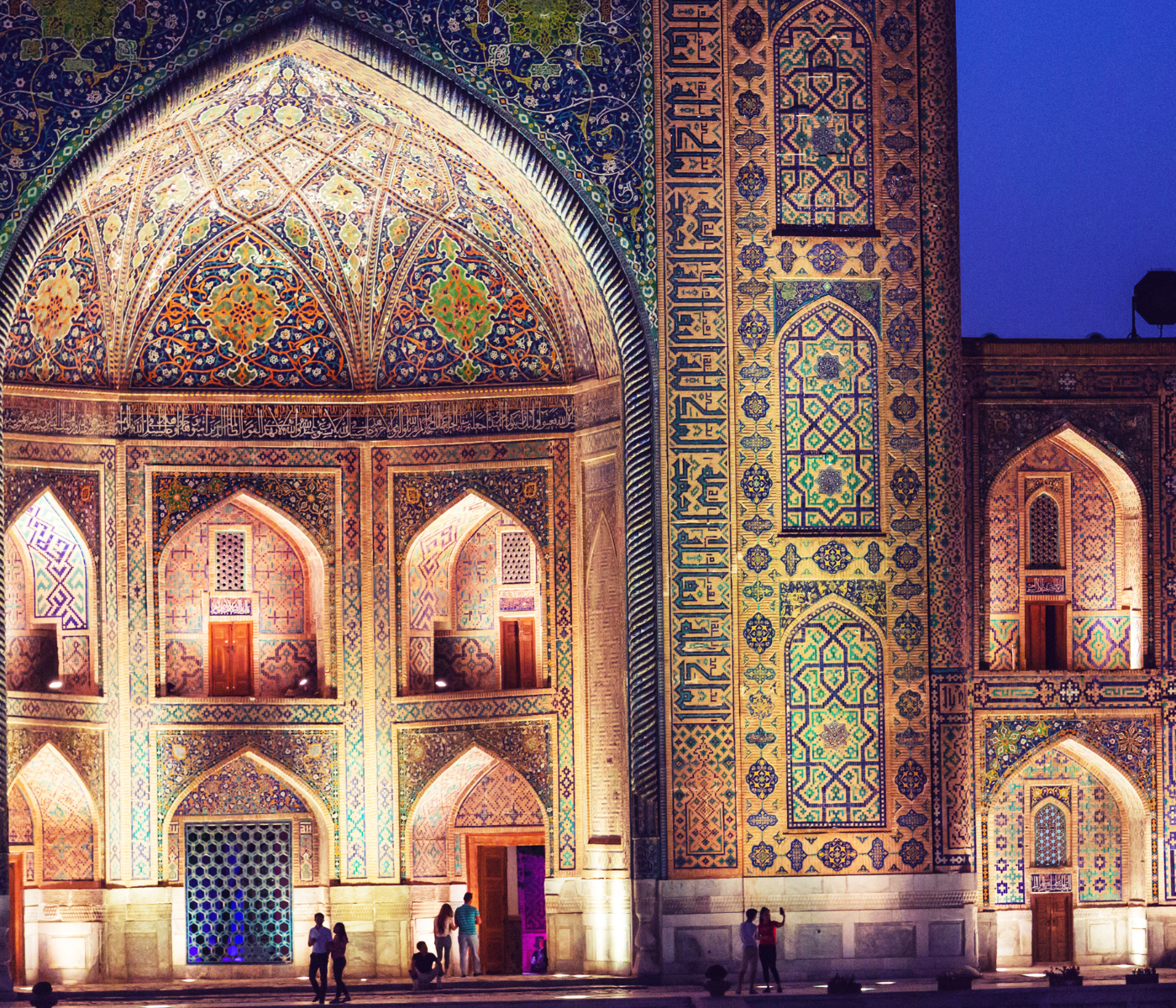
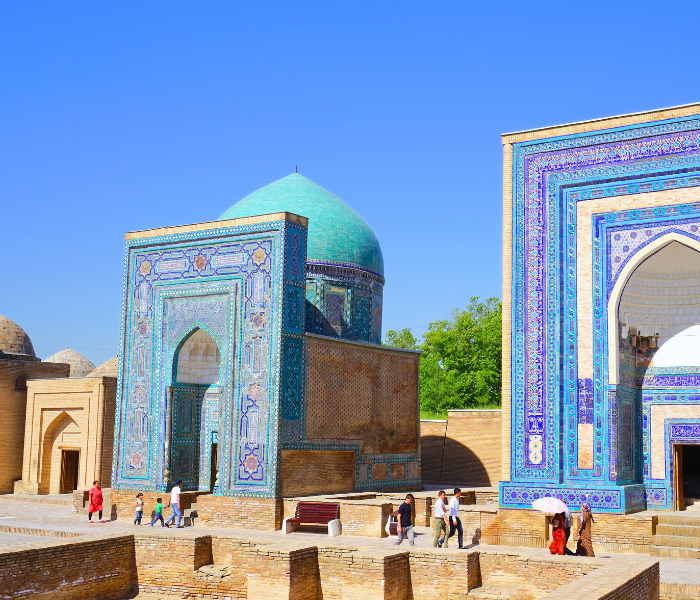
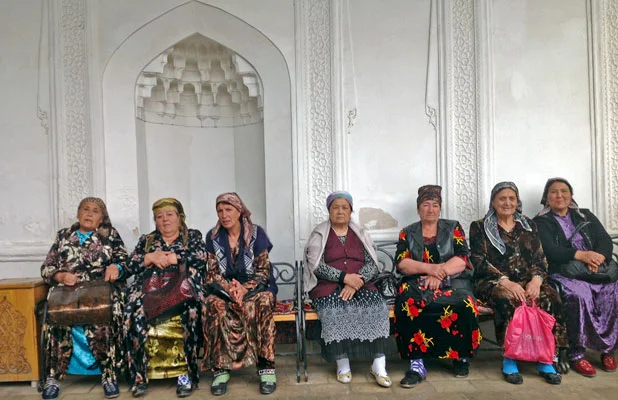
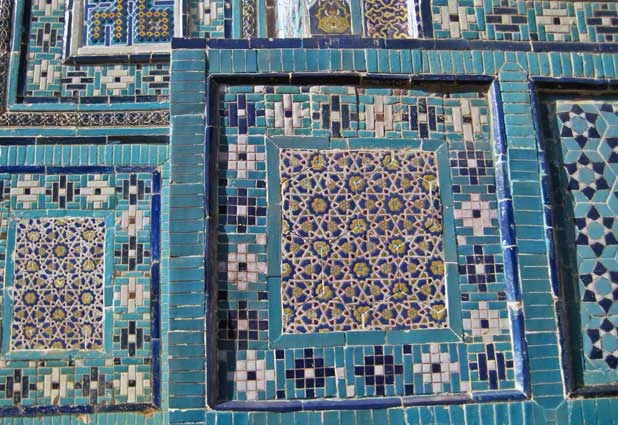
Today a Silk Road road trip reveals arching blue-tiled mosques, tall minarets constructed of baked mud brick woven into fabulous patterns, bountiful piles of vivid handwoven carpets, women in brilliant dresses and men in traditional felt headgear, as well as the steadily modernizing countries of Central Asia.
Why Travel the Silk Road Now? The Pamir Highway
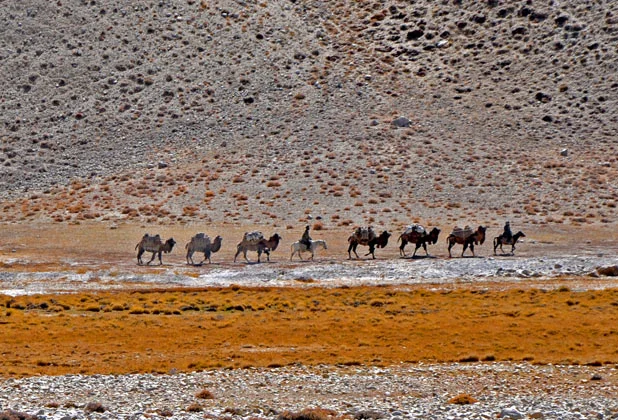
There are many places along the Silk Road that were difficult to travel in the past. Today it’s much easier, thanks to sturdy vehicles and groups traveling together. An example is the sky-high Pamir Highway, dubbed the “Silk Road Less Traveled,” winding through Kyrgyzstan, western China, and Tajikistan.
A particularly challenging branch of the Silk Road, it ventures up and over the Pamir Mountains, some of the most rugged and beautiful on Earth, soaring upward where the Himalayas, the Tien Shan and the Hindu Kush meet.
Why Travel the Silk Road Now? Silk, of Course!
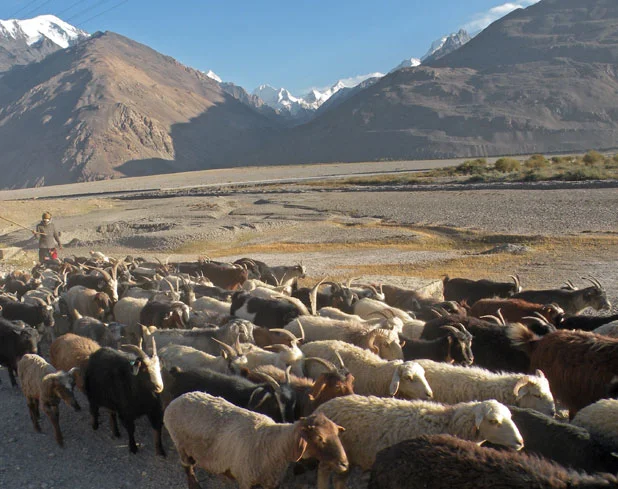
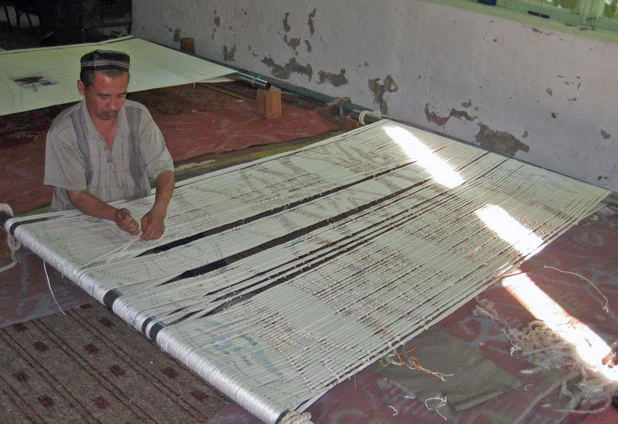
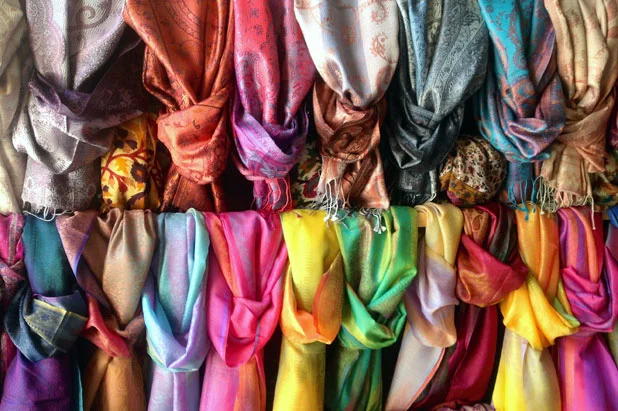
For the best silk-making experience, visit the heart of it all in Fergana Valley’s Silk Road city of Margilan, Uzbekistan. Here you can visit silk weavers whose silk-making methods and traditions have been handed down for generations, preserving hundreds of traditional designs. It’s simple to create a custom Silk Road silk journey, delving into the history and art of making silk.
Why Travel the Silk Road Now? Afrosiab Fast Train
Yes, you could cover the Silk Road by camel, but why? Trains, planes, buses and automobiles have made it so much easier.
Even easier is traveling to the Silk Road’s highlight city, Samarkand, Uzbekistan. Until recently, it took hours of travel on a bumpy highway or on a very uncomfortable train from Uzbekistan’s capital city, Tashkent, to Samarkand. Now, a fast, comfortable high-speed train, the Afrosiab, whisks travelers 214 miles to the fabled oasis of Samarkand in just two-and-a-half hours. The Afrosiab gets its name from an ancient town near Samarkand. Perhaps best of all: the Afrosiab is air-conditioned!
Why Travel the Silk Road Now? The Savitsky Museum
If ever there were legends about Silk Road countries, surely the vision and fearlessness of artist Igor Savitsky is among the finest folklore. And it’s all true.
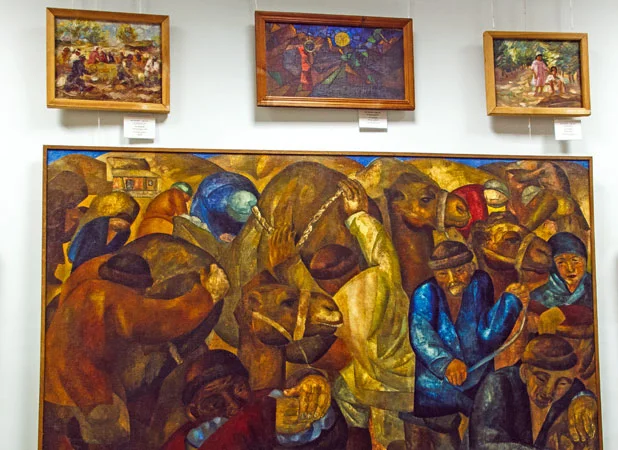
The Savitsky Museum shelters one of the world’s largest collections of Soviet-era avant-garde art in the desert backwater of northwest Uzbekistan: Nukus, Karakalpakstan. Russian artist Igor Savitsky fell in love with the area in the 1950s and made it his home. Distressed to learn Soviet officials were banning and destroying Soviet avant garde paintings, Savitsky concocted a plan to convince authorities to let him buy many of those paintings – some 40,000 – for his new museum in the desert, in Nukus.
It worked. All those paintings were saved from destruction, and today preserved for those who admire not just the artwork but the man behind the Savitsky Museum. An award-winning documentary, The Desert of Forbidden Art, grabbed world attention with its riveting story of Savitsky’s rescue of so many pieces of banned art.
It’s a critical time to visit Nukus and see the Savitsky Museum’s avant garde art first-hand, since it continues to be threatened with closure and other financial difficulties. It is a modern-day Silk Road treasure, considered by some one of the world’s best museums.
All the more reason to travel the Silk Road now, exploring and appreciating its ancient and modern history.
(Top photo credit: Martin Klimenta – Precisely-placed blue-hued tiles adorn these domes in Samarkand, Uzbekistan.)